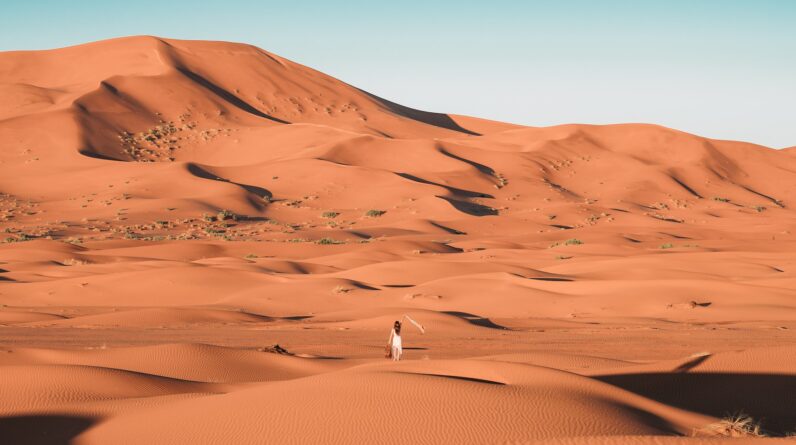
The desert has its own survival advice, much like the woods do. Although desert survival strategies differ slightly from those for wilderness survival, both still call for the same supplies: food, water, and shelter.
A vacation to the desert may seem like fun and excitement, and that is true—until you get lost in the sweltering, dehydrating desert, that is.
Here are some pointers to keep in mind the next time you plan to take a trip to the desert, just in case the worst case scenario occurs and you become lost.
You will need to find a shelter for yourself first and foremost. The easiest shelters to build in a desert environment are sandwich shelters and lean-to shelters. These shelters are incredibly simple to construct and can shield you from the scorching sun and sand-filled wind that can cause excruciating sand burn.
Due to the temperatures your body would be exposed to when the sun sets, you should start building your shelter at that time.
Cramming yourself into a shelter for an extended period of time during the warmest part of the day can only cause significant dehydration. You want to make sure that your body stays hydrated.
Before embarking on your desert journey, include all the materials you might need to build a shelter in your survival pack. These include blankets, cords, rope, and even ponchos.
Because there are many different animals that lurk in the desert and having a properly constructed shelter can stop animals from troubling you or injuring you in any way, you still need to make sure that you have a safe place to stay.
If you are lost or trapped in a desert environment, having a water supply close by is extremely crucial.
Your body is more readily dehydrated in the desert than it would be in the wilderness since it is so hot there. Since it is more difficult to find a water source in the middle of a desert, most people will build their own water filtration system. They do this so that they can have water without having to use a water source.
You only need a plastic sheet for this technique, which is also known as the solar still-water method.
You should first dig a hole in the ground and cover it with plastic. The water from the soil will then evaporate when the light shines on the plastic, leaving you with condensed water inside your plastic.
Another approach is to use cactus to help you drink water. Cacti are abundant in deserts and can easily be pierced and opened to provide you with a water supply. Thus, look for cacti to provide you with water to rehydrate your body if you are having trouble making the solar still process.
You still need a fire source to cook food and ward off other predator animals even when the desert is scorching hot. To continue using the fire source as a defense mechanism, make sure to build a fire fairly close to your campsite.
Even though it can be hard to find wood in the desert, you can still start a fire quickly. Make sure you have a lighter and a reliable set of matches. Due to the difficulty of obtaining wood in the desert, many survivalists choose to travel with a portable grill. Many people take a convenient portable grill with their survival supplies when they head out to the desert, just in case.
Also, it’s important to have a first aid kit on hand, including a map, compass, and other information to help you find your way. You want to make sure that you always stay in touch with your campground because the desert can seem endless.
Most frequently, when search and rescue teams are looking for missing people, they will discover the campsite. Therefore, make sure you give yourself the right lines in the sand or landmarks to know exactly where you are, even if you go off to find your way back. Nothing is worse than getting lost and then getting lost some more.
In summary, the next time you decide to embark on a desert trip or adventure, be sure to pack your survival kit with food and water supplies in case you get lost, as well as the tools you might need.