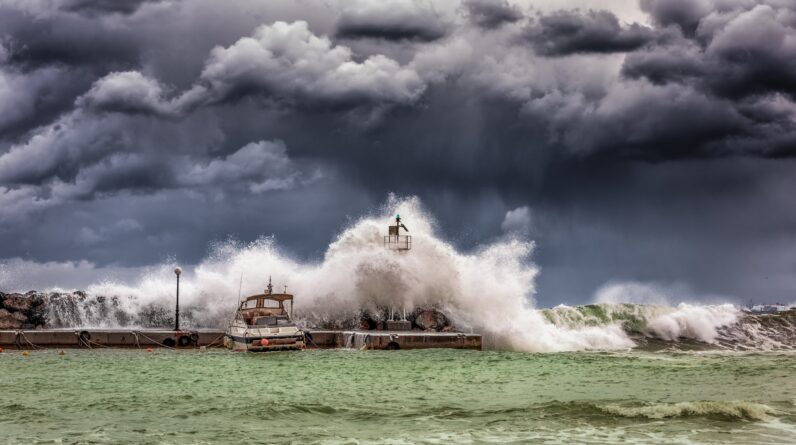
A tropical cyclone is the meteorological phenomenon that the terms “hurricane” and “typhoon” refer to. A zone of low pressure at the core of these storm systems, together with big thunderstorms that produce strong winds and heavy rain, are what define them. These systems, which spin in opposite directions in the Northern Hemisphere and the Southern Hemisphere, virtually exclusively form in the tropical areas of the world.
Seven key basins where these tropical storms often originate have been discovered by scientists. The Pacific Ocean comprises the North Central, Northeastern, Northwestern, and South/Southwestern basins, while the Indian Ocean is made up of the Northern, Southwestern, and Southeastern basins. Finally, the Atlantic Ocean consists of the Northern basin as one of its primary basins.
Distinct hurricane seasons take place in varied regions of the globe, typically during the latter part of summer, wherein the most significant disparity in temperature between the atmosphere and ocean takes place. Between 300,000 and a million people were killed when Bangladesh’s Ganges Delta was hit by the deadliest hurricane on record. The most frequent and deadliest hurricanes have struck the Northern Indian basin since the early 1900s. Hurricanes cause significant property damage. Over $80 billion worth of property damage was sustained by Hurricane Katrina in the US.
Most preventive actions are often taken by local governments to reduce the loss of life and property. The majority of towns and cities have emergency preparations in place, using sirens to warn people of impending danger.
To keep people informed, emergency broadcast systems are in place. In addition, many towns have food, water, and medications on hand in case their water or power systems fail.
Most people who live near or on coastlines will at least once in their lifetime encounter a hurricane. Some people are prepared to board up windows and doors and flee almost instinctively because it happens frequently to them. But a lot of us just need to be aware of what to do in a hurricane.
What Should I Prepare For If a Hurricane Approaches My Area?
Fortunately, compared to other natural disasters, hurricanes are simpler to identify and prepare for. Scientists can now reliably anticipate the direction and timing of storms by observing cloud forms and movement thanks to the development of contemporary satellites.
Weather forecasters will alert the public to the impending hurricane when it gets closer to land and is seen on radar. Many things could change at this early stage. The community can stay updated on the progression of the storm through the local weather service, as the storm’s intensity and direction tend to change rapidly. Local governments and emergency services start to activate emergency preparations and procedures during this time.
As soon as homeowners become aware of an approaching storm, it is essential for them to take action by securing their outdoor lawn furniture and equipment, as well as boarding up their windows and doors. You and your family should leave the region as the storm approaches. There is no sense in taking unwarranted risks.
To weather the storm, it is important to make sure you have all the necessary essentials on hand, such as an ample supply of fresh water, canned foods, candles and batteries, a battery-powered radio, and an adequate amount of generator fuel. In the aftermath of a hurricane, the scarcity of water can pose a serious threat to life. Therefore, it is advisable to store sufficient clean drinking water in all available vessels, even including your bathtub.
A medical kit with bandages, medical tape, antibiotics, and scissors is the one thing you’ll need the most during and after a large hurricane. If you or a member of your family sustains injuries, this could avoid fatal infections and save your life.
You should develop an emergency plan with your family well before the storm even materializes.
If folks aren’t at home, decide where to meet. Keep readily usable or transportable materials for the car in your storage space. Plan ahead for where you will stay and who will be in charge of aiding family members who can no longer care for themselves. Establish distinct roles and duties for locking the door and securing outdoor goods before closing the house. Being well-prepared can greatly decrease the likelihood of a hurricane causing havoc to your family and increase your chances of coming out unscathed, both physically and financially.
What will occur when a hurricane hits?
The hurricane’s winds, which may reach speeds of over 100 mph when it strikes land, can pick up and toss everything around like toys. Homes can be damaged by cars, roofs, big pieces of metal or wood, and other flying debris. Finding the safest shelter is the best course of action because there isn’t much one can do in this circumstance. You might not be able to stop significant harm to your house, but you can safeguard your life.
You will be recommended to evacuate or, at the very least, seek higher ground if the approaching hurricane strengthens to a category 4 or 5. You can get stuck in a flood if you try to wait it out in your basement.
Travel light if you have to or can evacuate your neighborhood. Take only the things you’ll actually need during the next 24 to 48 hours. Included in your evacuation supplies should be a change of clothes, food, and water.
Drive gently and cautiously when you travel to the closest public transportation stop or in your own vehicle. Accidents are more frequent due to the difficulty of seeing caused by strong winds and pelting rain. DON’T freak out. Additionally, this could result in avoidable mishaps and encourage others in the same circumstance to act frightened.
In a few hours, the hurricane will pass, and you should be able to go back to your house. You shouldn’t be concerned; the tremendous floods that prevented people from visiting New Orleans following Hurricane Katrina were an exceptional occurrence. Levees failed, resulting in an unusual circumstance.
What happens after the hurricane has passed?
Review your family’s actions after the hurricane has passed to determine whether your strategy was logical and efficient. In coastal places, hurricanes are a constant threat. You can learn from your experience by creating a better plan for the next hurricane season.
Communities cannot assess how effective their emergency plans and procedures were until after the event. Low reports of fatalities or injuries are a good sign. The extent of the property damage will also reveal how successful the emergency response was.
After a hurricane, state, city, and local governments should evaluate their plans and procedures in order to make any necessary improvements. Citizens should question elected officials about the outcomes of their performance evaluations and demand that any necessary adjustments be made.
Everyone has a stake in and a responsibility for hurricane emergency preparedness.
While governments are taking measures to protect the lives and property of their citizens, it is crucial for individuals and families to proactively devise their own solutions for safeguarding their personal health, safety and property.