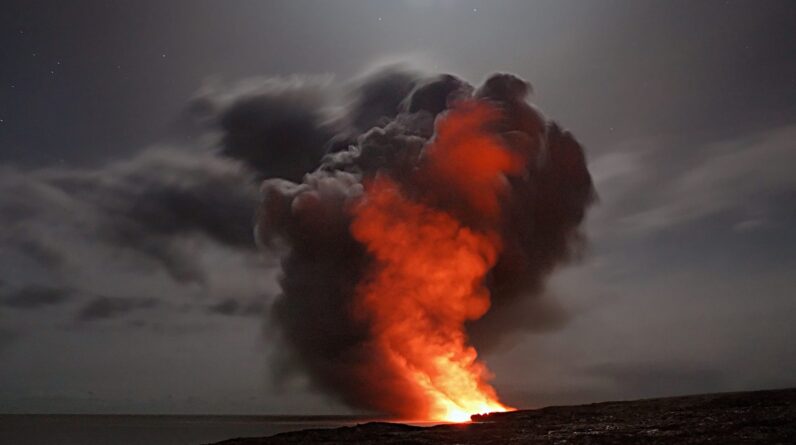
Volcanic eruptions are among the most severe and devastating natural disasters.
Mountains can be erected or torn down by them. They can quickly destroy numerous cities and villages. Even the Earth’s climate can alter as a result of them.
A total of more than 25 cubic kilometers of ash, rock, and pumice were released into the environment in 1883 during the infamous Krakatoa eruption. The sound it created was the loudest ever recorded and was audible up to 2000 kilometers distant. After it was over, 36,000 individuals and more than 165 communities were destroyed.
Volcanologists, or scientists who study volcanoes, are developing their ability to foretell when eruptions will occur and how severe they will be. They are still far from being able to predict when a volcano will erupt, though. It’s important to understand the basics of a volcano eruption so that you can be prepared to respond quickly in the event of an emergency, even though there may be some general symptoms such as tremors or odd animal behavior.
1. Get to know the terminology that scientists use to refer to volcanoes and volcanic explosions.
You will be able to comprehend news articles and information better in this method.
Small dust and rock fragments known as volcanic ash are released into the atmosphere together with volcanic gases. Due to their extreme acidity, these ashes can corrode metals, clog machinery, destroy fabrics, and restrict water flows. Animals and flora are killed by volcanic ash. It can accumulate to weights on roofs that will bring the structure down. Volcanic ash acts like cement when combined with water. It quickly becomes harder, making breathing dangerous.
Lava, or streams of molten volcanic rock, is referred to as pyroclastic flows. The topography and the lava’s composition both affect how quickly they travel. Some pyroclastic flows are extremely quick and devour everything in their path.
2. Recognize where pyroclastic flows are most likely to occur in your area. They will generally follow low-lying places like riverbeds and floodplains because they are semi-liquid.
3. Avoid a nearby volcano if it shows symptoms of exploding. It might only take a moment for the eruption to occur. You won’t be able to get away if you’re too close.
4. If the government orders your evacuation, comply right away. Bear in mind Pompeii. Your community might be covered in ash even if it isn’t inundated by pyroclastic flows. You must leave the region if you want to defend yourself. Buildings might offer some safety, but they can also turn into deadly traps.
5. Steer clear of any bridges that might be carried away by a mudslide. If you have to cross a bridge to get away, attempt to learn what’s going on upstream, so you aren’t caught off guard by an approaching mud torrent.
6. Remain inside and keep your doors and windows closed if the volcano is ejecting volcanic ash.
To protect your lungs, put on a mask.
7. As soon as it’s safe, remove the volcanic ash from your roof and gutters.
The weight of volcanic ash can cause buildings to collapse. As previously mentioned, if it gets wet, it can also turn into concrete-like material and permanently clog your pipes, drains, and gutters.
8. If you must drive, stay away from areas where there is already a heavy covering of ash or dust. Additionally, go gently to prevent becoming caught in pyroclastic flows or mudslides.
9. Be ready to bring everything you’ll need for several days of survival, including food and water. Bring extra batteries, sturdy dust masks, protective gear, fresh water, and sufficient food to maintain your energy levels.
You owe it to yourself to comprehend how volcanoes function and the dangers they pose if you live close to one that is active. Understand what to do to safeguard your life and your possessions. Additionally, keep an eye on the radio for updates and crucial life-saving information if there are any indications of an impending eruption.
One of nature’s most potent forces, volcanoes cause a lot of harm that is unavoidable. The event continues even after the eruption has ended. There will be extensive cleanup, slow reconstruction, and ongoing health and environmental issues. However, your chances of surviving and staying healthy increase the more aware and prepared you are for such a dreadful catastrophe.